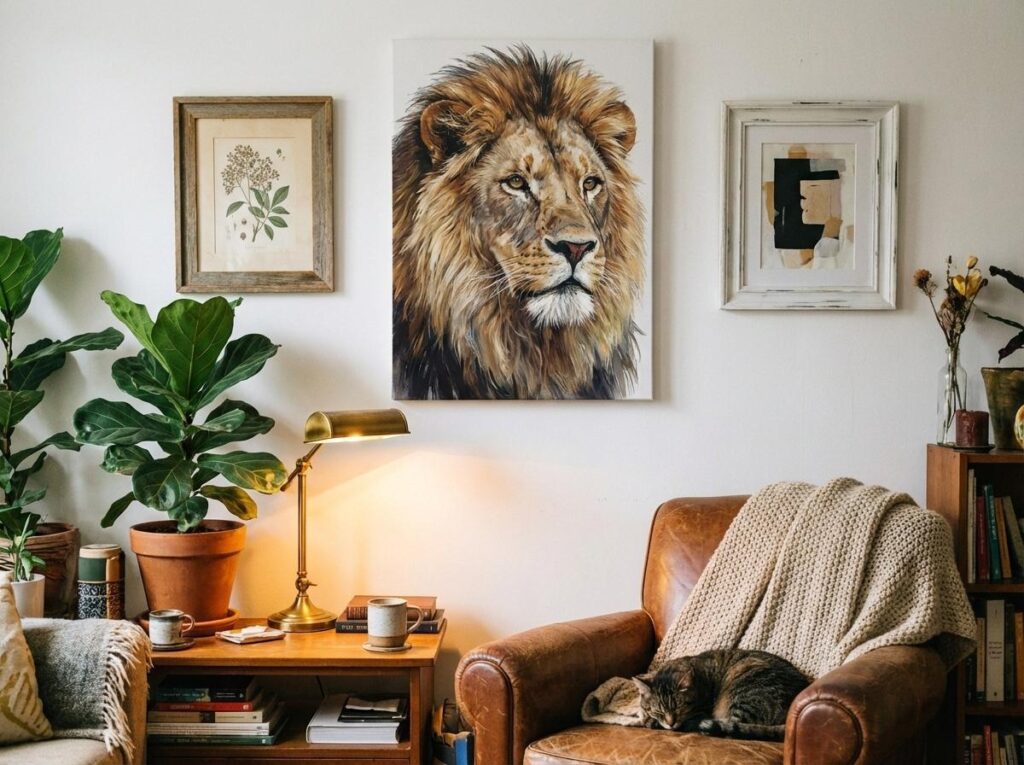
The right anchor piece changes everything – a quality canvas alongside a handful of thrifted frames turns a bare wall into something that feels collected
Wall art is one of those categories at Goodwill outlet stores that draws a crowd fast. The second a fresh bin rolls out and someone spots a canvas leaning against the side, the digging gets competitive. That’s not an accident. People who shop the bins regularly know that art, frames, and prints are wildly underpriced compared to what the same pieces might sell for at a thrift store or antique mall – and that the variety cycling through is genuinely unpredictable.
But finding art at the bins isn’t just luck. There’s strategy involved, and knowing what to look for makes the difference between walking out with a find you’ll hang for years and dragging home something you’ll donate back inside of a month. There’s also the question of when thrift-found art isn’t quite enough – and what to do about those gaps.
This guide covers all of it: how to shop the bins for art, what makes a find worth buying, and how to build a gallery wall that mixes the best of both worlds.
Why the bins are a surprising source for wall art
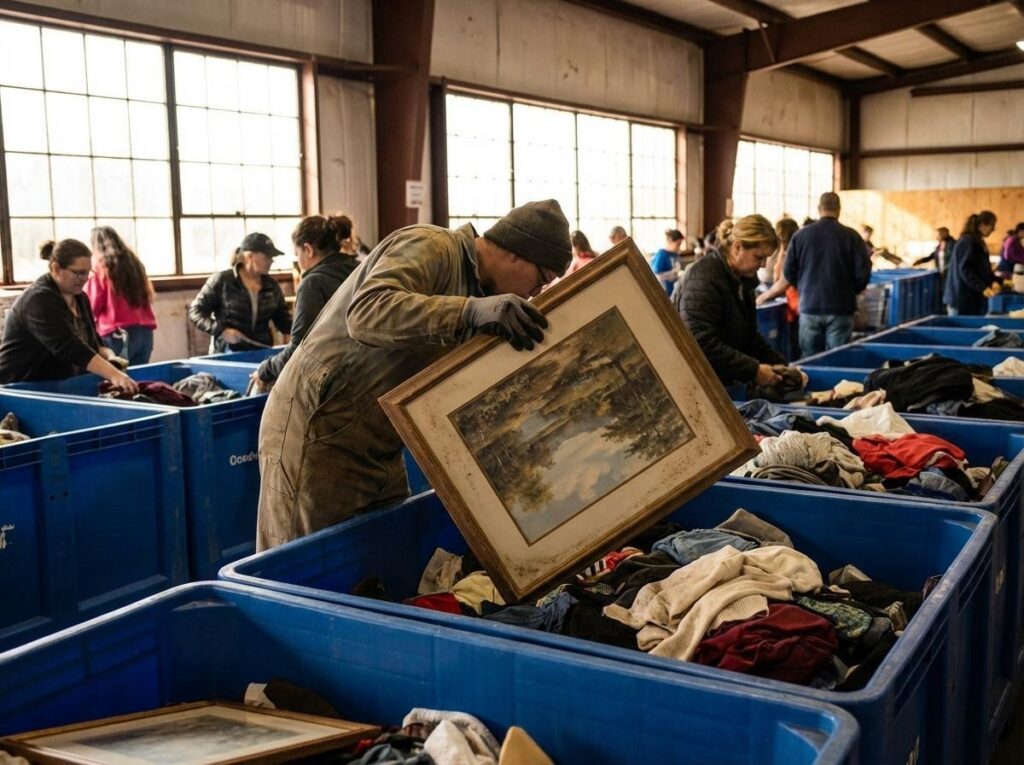
A shopper pulling a framed canvas from a Goodwill outlet bin – one of the more rewarding finds at the bins
Here’s something most people don’t know about Goodwill’s supply chain: items at regular Goodwill retail stores only stay on the floor for a set window – typically around five weeks. If they don’t sell, they get rotated out to the outlet bins. That includes canvases, framed prints, original paintings, and decorative wall hangings.
What that means practically is that the bins receive a constant stream of quality art that simply didn’t move fast enough at retail price. You’re not always getting the dregs. Sometimes, you’re getting a decent oil painting that sat in the wrong Goodwill store in the wrong neighborhood for a few weeks.
The bins also sell by the pound rather than by piece. Art is bulky and often light. That math works in your favor.
That said, competition has gotten real. According to Capital One Shopping Research (2026), thrift store foot traffic increased 39.5% between 2019 and 2025, and the U.S. secondhand market hit $56 billion in 2025 – up 14.3% year over year. More people are shopping thrift now than at any point in the last decade. The art section is no exception.
Timing matters, but so does knowing what you’re after. Animal and wildlife art is one of the more consistently stocked categories at the bins – portraits of dogs, lions, birds, and deer cycle through in every format, partly because those collections were donated in large numbers as older generations downsized. But consistent supply doesn’t mean predictable selection. Say you want something specific for the bedroom wall – a bird study, or a lion portrait with real weight to it. You work through two bins, you find a landscape you like and a floral print that’s almost right, but nothing with an animal that fits.
That’s not a failure. It’s just how specific it gets when you know what you want. When the bins come up short on a particular piece, a purpose-made animal art canvas from an independent artist fills that gap cleanly – no waiting, no compromise on subject or scale. That piece becomes the anchor. Everything else you find at the bins builds around it.
If you want a deeper understanding of how Goodwill bins work before your first visit, that’s a good place to start.
How to spot a good art find at the bins
The most common mistake new shoppers make is looking only at what’s visible on top. Experienced bin shoppers get their hands in early and move pieces quickly. If you’re hanging back waiting to see what others pull out, you’ve already lost the best items.
Check the back of any canvas or frame before you commit. Artist stamps, studio labels, gallery stickers, and framing dates tell you more than the front. A dated frame with a gallery label from a real shop is usually a better buy than something with no provenance at all. Original paintings show brushstroke texture and surface variation – once you’ve felt the difference, you won’t confuse it with a flat print.
Don’t let an ugly frame veto a good piece. Reframing costs $15 to $40 at a craft store with a standard-size frame, and it genuinely transforms what you bring home. If the image is right and the size works for your wall, the frame is just packaging.
Know your wall measurements before you leave the house. This sounds obvious, but most people skip it. Nothing is worse than standing at the bins holding a 36-inch canvas you love and having no idea if it’ll fit above your couch.
Curating a gallery wall that mixes thrifted and new art
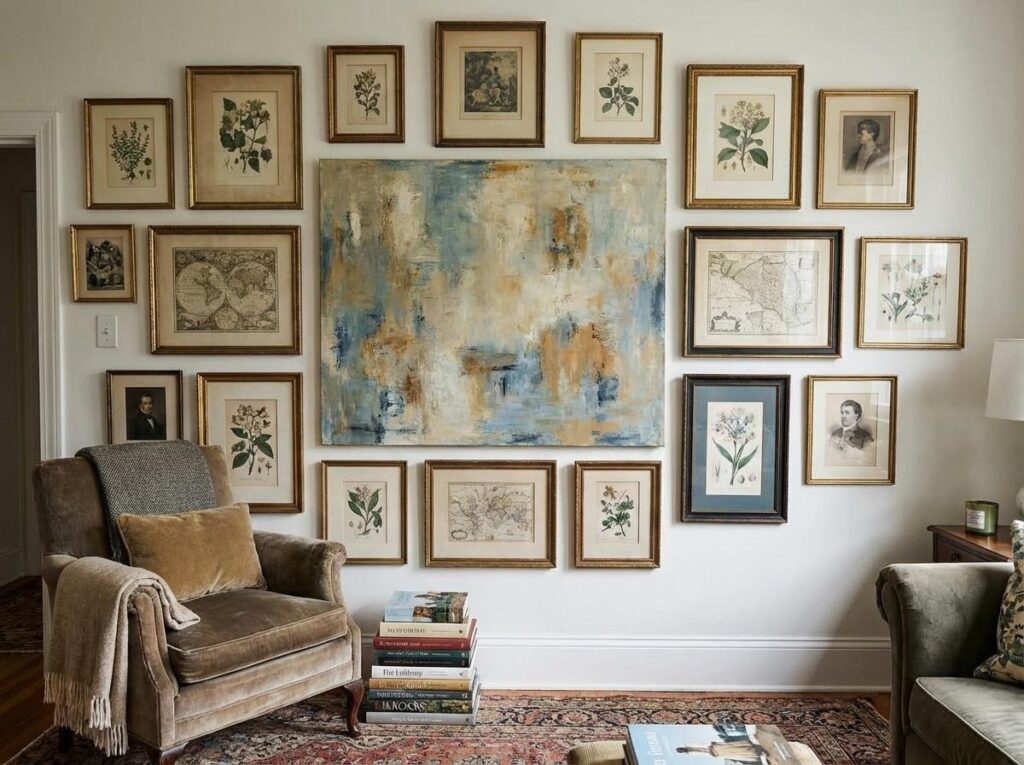
A gallery wall that pairs thrifted frames and vintage finds with a curated statement canvas creates visual depth without high cost
The best gallery walls don’t come from buying everything new. They also don’t come from buying everything secondhand. The sweet spot is usually a few thrift-found pieces built around one or two intentional anchors.
Start with whatever you already have or find first. A thrift-found frame or print makes a better starting point than a blank wall. Buy around what you discover, not the other way around.
Use one larger, higher-quality canvas as the visual center. Thrift finds in smaller frames feel curated rather than random when there’s a strong anchor piece holding the composition together. Size contrast is your friend here – one large piece surrounded by smaller, varied frames reads as designed rather than accumulated.
Match by color palette, not by style. Mismatched styles work when the colors are cohesive. If everything on the wall pulls from the same earth tone or cool-blue family, it’ll hold together even if one piece is a folk art rooster and another is a geometric abstract.
Wildlife and nature prints work well as those anchor pieces because they share organic color families – earth tones, deep greens, warm golds, slate blues – that sit comfortably next to almost anything.
Goodwill Industries International notes that decorating sustainably with secondhand finds is both environmentally sound and often more interesting than buying everything retail. Mixing thrift with new isn’t a compromise in 2026. It’s just how considered decorators work. If you’re still figuring out what you can find at Goodwill outlet stores beyond clothing, art and home decor are two of the strongest categories.
A few practical tips before your next bin run
Bring gloves. This is non-negotiable. Bins contain broken glass, sharp metal edges, and unknown materials. Thick work gloves let you dig without hesitation.
Scope your walls before you go. Take a photo of the space you’re trying to fill and note the measurements. You’ll make faster decisions at the bins when you already know what you need.
Set a focus for each visit. Art specifically, frames specifically, or a color palette you’re trying to match. Going in with no direction means leaving with things that don’t work together.
Inspect everything before buying. Check for mold smell – it doesn’t come out of the canvas. Look for tears, water damage along the edges, and cracked frames that can’t be repaired. All sales are final at the bins; there’s no returning a purchase that turns out to have mildew once you get home.
Respect the rotation rules. Every outlet has its own protocol for approaching fresh bins. Crowding staff during restocking is a quick way to get asked to step back – and you’ll miss the good stuff while you’re dealing with that.
One thing that surprises many first-timers: the bins accept donations of all kinds, which is part of why the quality varies so much. If you’ve ever wondered about what Goodwill outlet stores accept in donations, it helps explain why some days you pull out a near-gallery-quality oil painting and other days it’s all mass-produced prints with water damage.
The bins reward strategy, not just luck
Patience and preparation win at the bins. That’s the honest truth. You won’t hit a great art find every trip, and you probably shouldn’t expect to. The thrill of the find is real precisely because it’s not guaranteed.
But the best walls aren’t built on hope alone. They’re built on knowing what you’re looking for, being willing to invest in one or two quality pieces that do what a thrift find can’t always do, and having enough patience to let the right things accumulate over time.
Whether you leave a bins run with a signed wildlife painting for $3 or walk away empty-handed and order exactly what you wanted from an independent artist, both outcomes have a place on the same wall. The goal is a space that feels like yours. The path to get there doesn’t have to be expensive. It just has to be deliberate.