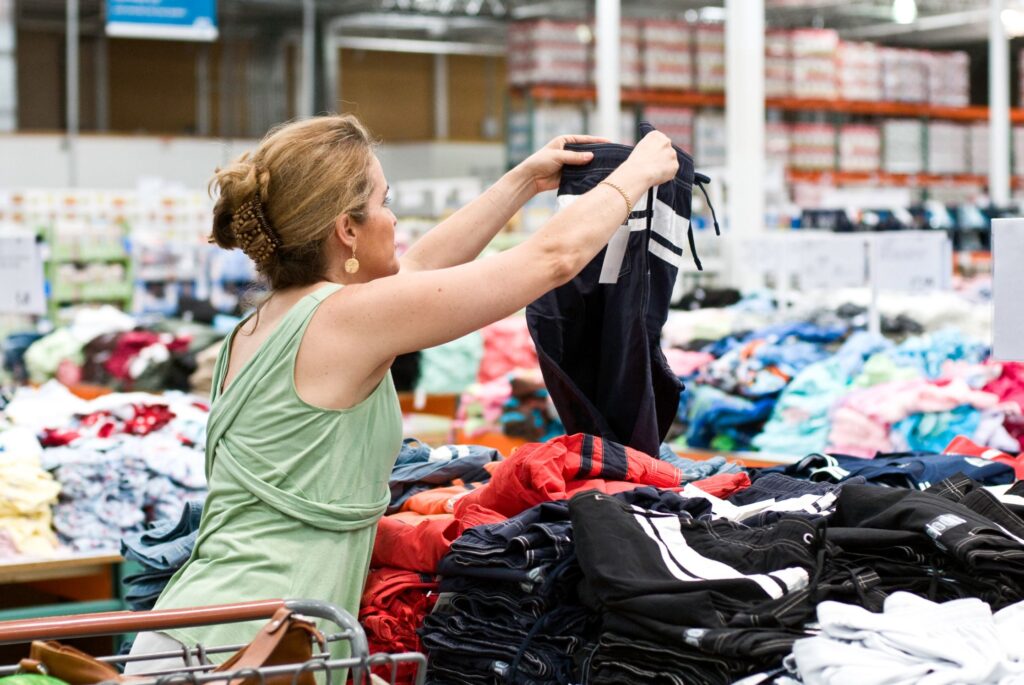
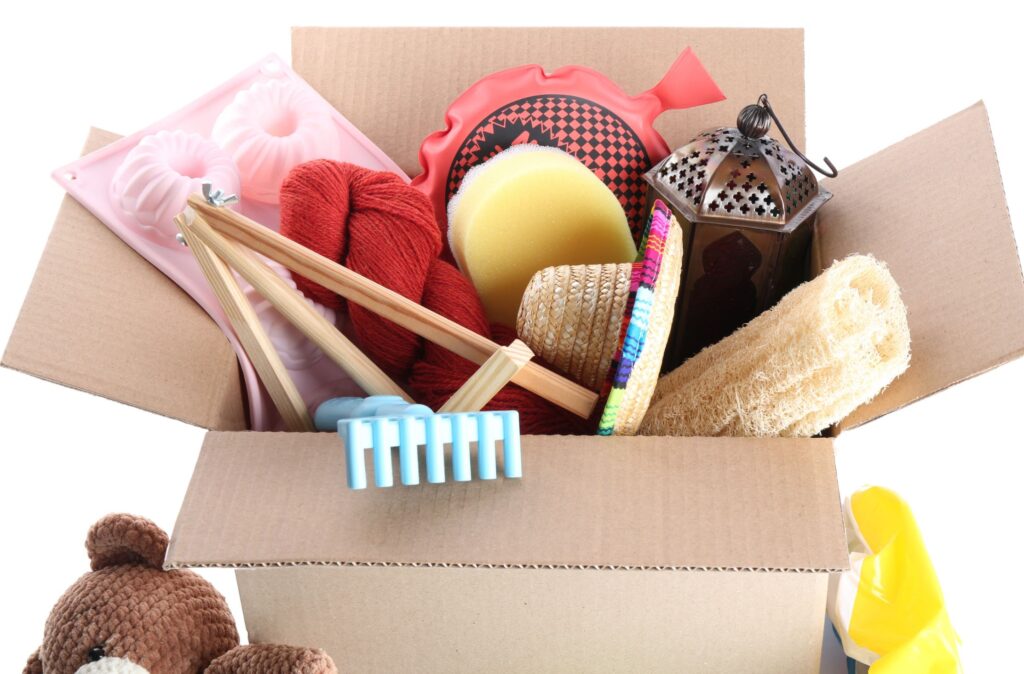
You drop a bag of clothes at a donation center and drive away. A few weeks later, a fraction of what was in it sits in a blue bin at an outlet store, priced by the pound and picked over by resellers and bargain hunters. Most people never think about what happens in between.
That gap is where reuse succeeds or fails. Every donated item has to be sorted, stored, moved and priced before anyone can buy it, and each of those steps costs time and space. A sweater that sits damp in a truck for a weekend won’t make it to a shelf. A box of mixed housewares that can’t be shelved quickly gets pushed down the chain to salvage.
This guide walks through that journey, from the drop-off door to the outlet floor, and explains why reuse is as much a handling problem as a generosity problem. It also covers what you can do to improve the odds that your donation gets a second life.
Reuse Is a Logistics Problem
Think about what a donation center actually does. Goods arrive in unpredictable volumes, in every condition, with no advance notice. Staff have to sort them quickly, store what’s sellable, ship overflow to other locations and clear out what won’t move. That’s warehousing, transportation and returns processing, the same work commercial brands deal with every day.
It’s why retailers handling returns, overstock and secondhand inventory often hand the job to a 3PL in Memphis, where pick-and-pack teams, returns processing and cross-country carriers sit within a short drive of each other. Memphis isn’t a random choice. The International Port of Memphis handled 7.2 million short tons of cargo in 2023, according to the Memphis MPO’s 2025 Mid-South Freight Report, on top of the rail and highway links that converge in the region.
Donation networks run on a smaller scale and a tighter budget, but the constraint is identical. The faster an item moves from intake to a selling floor, the more likely it stays in the reuse stream.
From Drop-Off to the Bins: How Donations Move
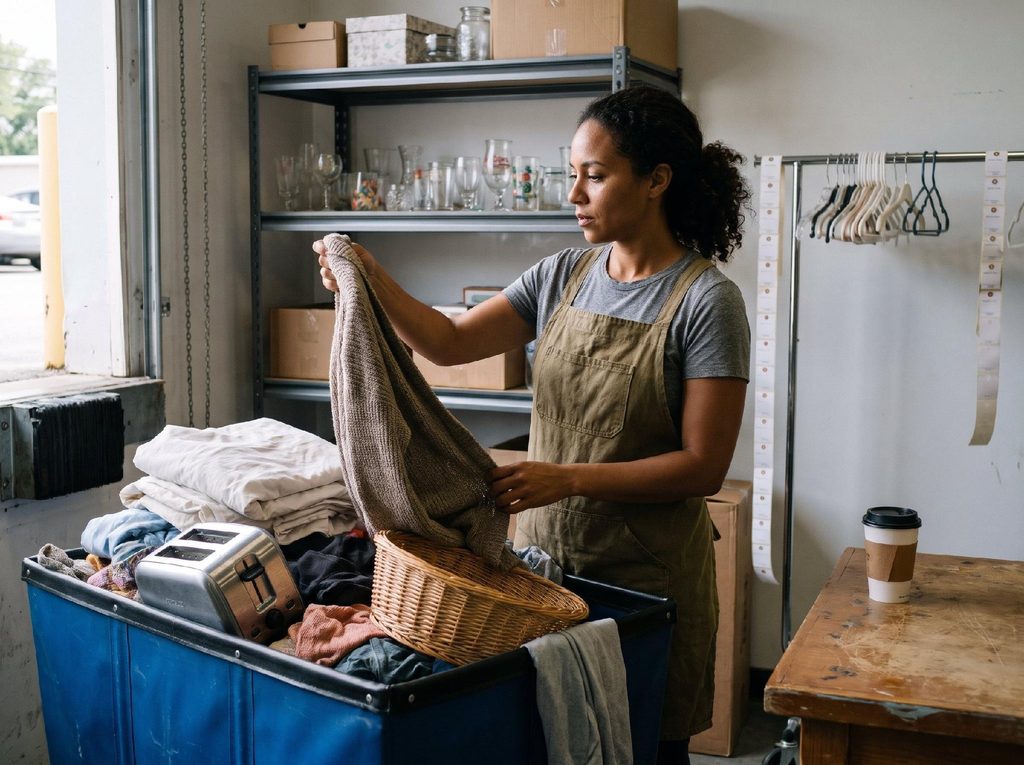
Once a bag leaves your hands, it follows a fairly predictable path. Workers sort items by category and quality. The best pieces go to the retail floor, where color-coded tags track how long they’ve been on sale. Items that don’t sell get marked down, and anything still unsold moves on.
That next stop is the outlet, or “bins,” where unsold goods are placed in large containers for shoppers to browse. Unlike traditional thrift stores, outlets typically sell clothing and other items by weight rather than pricing each piece individually. Prices often vary by product category and location, with shoppers paying based on the total weight of their finds. Items that remain unsold at the outlet may then be sorted for bulk resale, textile recycling or other salvage channels, depending on their condition and local processing options.
Each regional operator runs this chain a little differently, and shoppers benefit from knowing the local rhythm. Our guide to Ohio outlet stores that sell by the pound shows how much locations vary in layout, hours and restocking schedules, which matters if you want first pick of fresh bins.
Where Reuse Breaks Down: Textile Waste by the Numbers
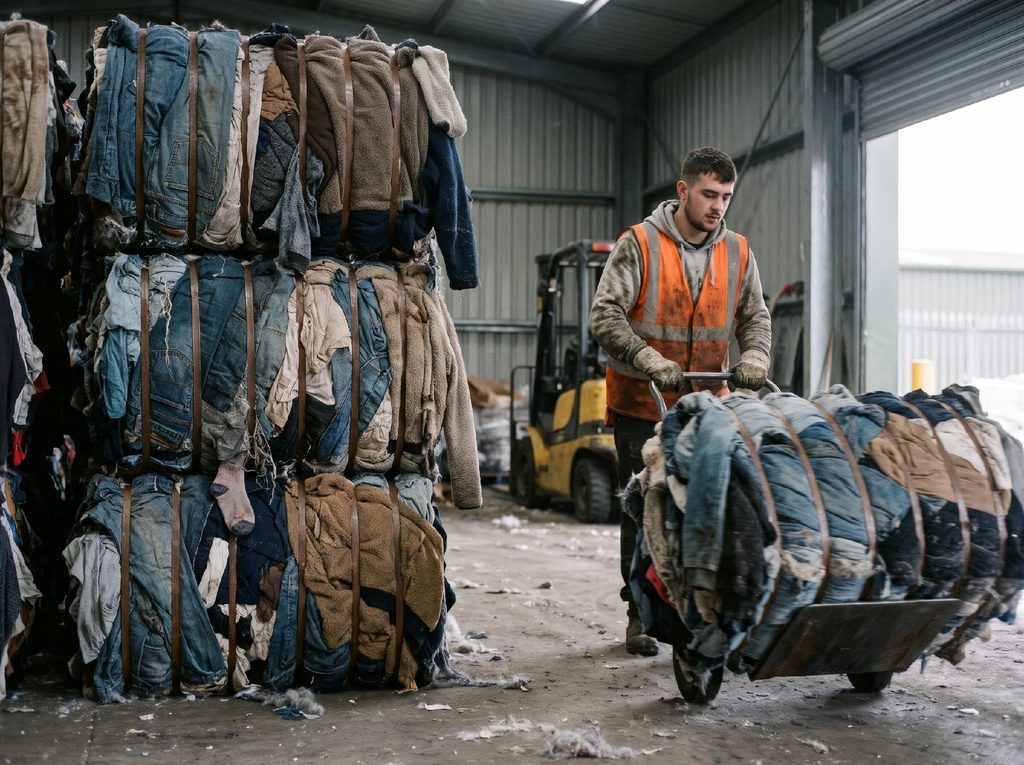
The scale of the problem is bigger than most donors assume. The EPA’s textiles data shows Americans generated about 17 million tons of textile waste in 2018, and 11.3 million tons of it ended up in landfills. The EPA notes that reused textiles aren’t counted in its generation figures, so donation clearly keeps some clothing out of that number. But the landfill total shows how much still slips through.
Why does so much fail? Usually it’s condition and handling, rather than lack of demand. Items stored in damp conditions develop mildew. Torn, stained or heavily worn goods can’t be priced for retail, and mixed bags take longer to sort than clean, folded ones. Outlet stores have limited floor space and tight labor, so anything that needs extra work tends to get diverted.
Local capacity matters too. Our look at donation centers across Georgia shows that some regions have a dense network of drop-off points while others have only a handful, which affects how quickly goods get sorted and how far they travel.
What Shoppers and Donors Can Do
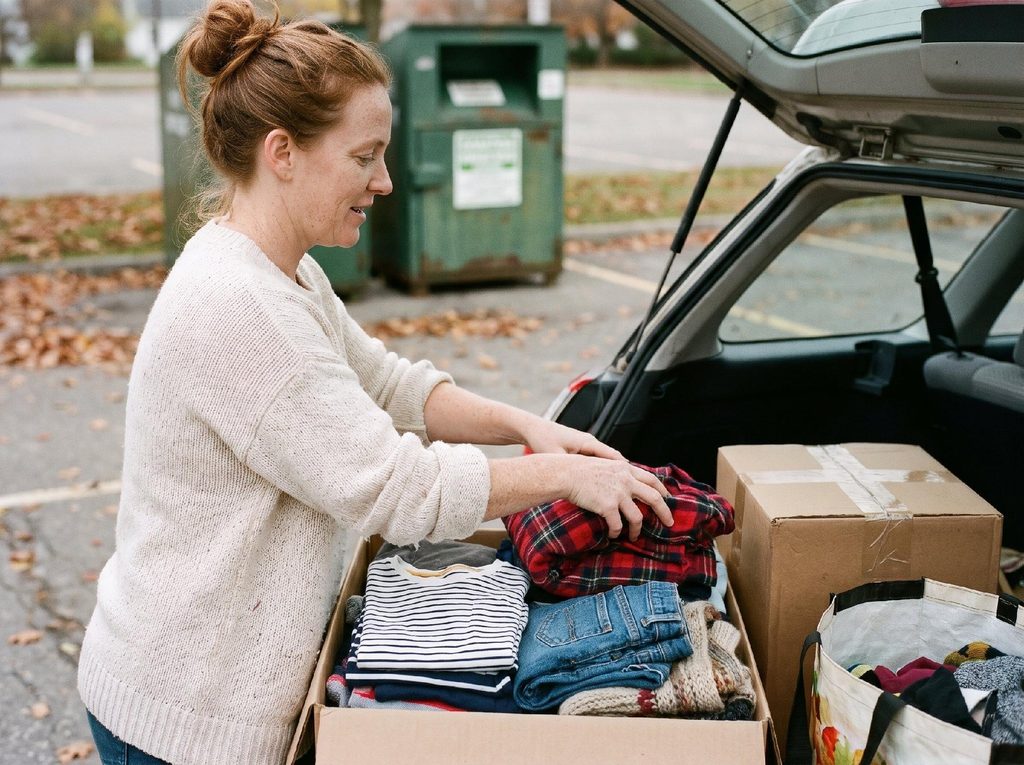
Small habits at the drop-off point make a real difference.
- Donate clean, dry items. Moisture can cause mold to develop and spread to other donated textiles. The Michigan Department of Environment, Great Lakes, and Energy advises keeping clothing clean and dry before dropping it off, since contaminated donations may end up being discarded.
- Fold clothing and bag it separately from housewares. It speeds up sorting.
- Hand donations to an attendant rather than leaving them outside a closed center, where weather and theft take a toll.
- Skip broken electronics, stained items and anything recalled or unsafe. They cost money to dispose of.
Shoppers have a part to play as well. Outlet bins turn over throughout the day, so visiting on restocking days gives you the best selection, and buying secondhand extends the life of items that would otherwise be discarded.
If you’re a reseller, treat bins like any other inventory source. Know your categories, inspect items quickly and decide fast, because the next bin is already coming out.
The Bins Are the Last Stop
A Goodwill bin looks like chaos, but it’s the end of a long, carefully managed chain. Every item that reaches it has already survived sorting, storage and transport. Every item that doesn’t has usually fallen victim to a handling problem, not a lack of buyers.
Reuse works when that chain moves efficiently, and donors control the first link. Clean, dry, sorted donations give the rest of the system a fighting chance, and that’s the simplest way to keep good goods out of the landfill.