You scored a great haul in the bins, listed it on a Saturday, and by Monday three items had sold. Great. Then the next week brought ten orders, and the spare room started to look like a shipping department. Boxes in the corner, mailers on the bed, a label printer humming at 11 p.m.
That’s the moment a hobby turns into a business, and it comes with problems the bins never taught you about. Shipping costs eat margin. Packing eats evenings. Returns show up with stains you swear weren’t there. This guide walks through how to spot the tipping point, handle returned items without losing money, and decide when outsourcing makes sense.
When Reselling Starts Looking Like Ecommerce
Early on, reselling is simple. You buy by the pound, clean what you find, photograph it, and ship it yourself. The trouble starts when one-off flips become repeat orders. Now you’re managing stock locations, tracking what’s listed where, and packing the same item types over and over.
At that point you’re running a small online store, whether or not you call it one. Many sellers at this stage look at a third-party logistics provider (a 3PL) such as www.thefulfillmentlab.com to handle storage, picking, packing, and shipping, so they can spend their hours sourcing instead of taping boxes.
You don’t have to make that call yet. But it helps to know what you’re measuring. Track how many minutes each order takes from pick to drop-off, and multiply by your weekly volume. If you’re losing a full workday to packing, that’s time you could spend at the outlet. If you’re still figuring out where to find inventory worth shipping, our guide to selling your finds to an outlet covers another way to move stock that doesn’t need a label at all.
Returns: The Cost Nobody Budgets For
Most new resellers price an item by what they paid plus what they hope to make. Almost nobody adds a line for returns. That’s a mistake, and the numbers show why.
The National Retail Federation and Happy Returns expected US consumers to return about $849.9 billion in merchandise in 2025, or 15.8% of retail sales, according to their 2025 retail returns report. Online is worse: the same report projected that 19.3% of online sales would come back. And 82% of consumers said free returns matter to them when they shop.
Those figures come from large retailers, so treat them as a ceiling for your own shop rather than a prediction. But the pressure is real for resellers too. Buyers of used clothing expect the same return experience they get from big brands, and condition disputes are more common with secondhand goods. “It was described as good condition” is a hard argument to win over a photo of a pulled thread.
The fix is boring but it works. Photograph flaws up close, list measurements, and write your return policy before you need it.
Restock, Resell, or Donate: Handling Returned Items
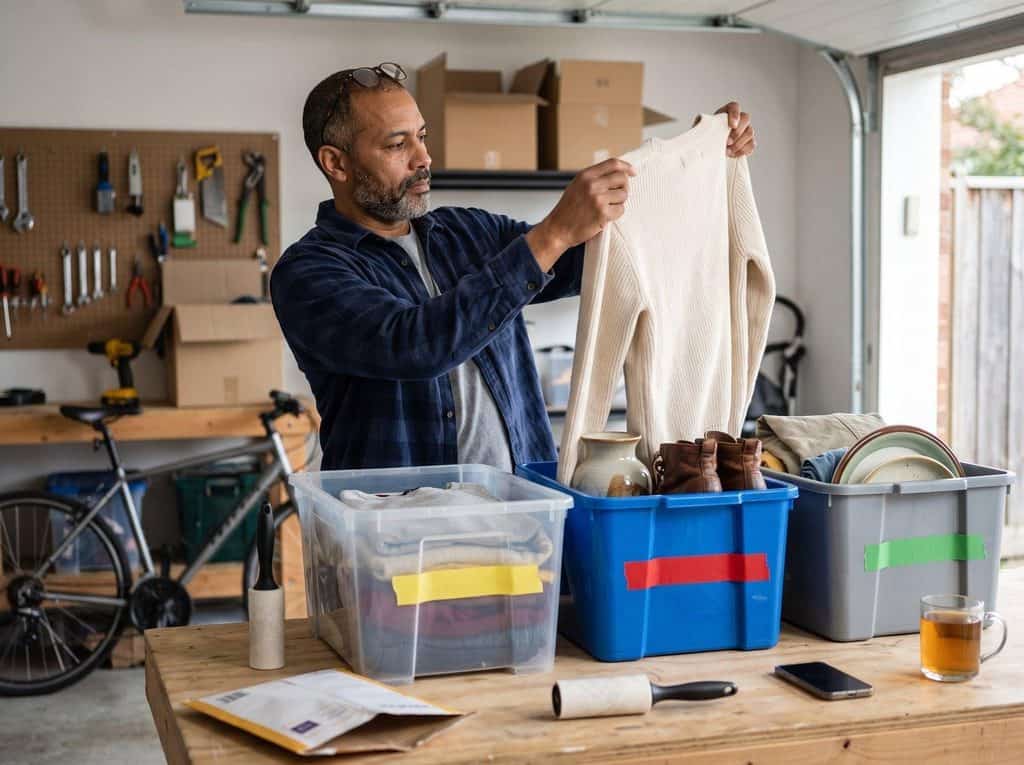
Sorting returned items into restock, resell and donate piles keeps inventory moving
A return isn’t a loss until it sits in a box for six weeks. The faster you decide what happens to it, the more of its value you keep. Sort every return into one of three piles.
Restock: the item is as described, clean, and unworn. Re-photograph if needed and relist the same day.
Resell: the item has a flaw, but someone will still buy it. Relist it at a lower price with honest photos, or move it to a different marketplace where buyers expect discounts.
Donate: the item can’t be sold for a fair price, or it isn’t worth the listing time. Giving it back to the reuse loop beats the trash can.
That last option matters more than it sounds. The EPA’s textiles data shows that Americans generated 17 million tons of textiles in 2018 and sent 11.3 million tons to landfills. Reuse isn’t counted in those generation figures, so the true picture is a little better, but the clothing and footwear recycling rate was only 13%.
Be realistic about quality, too. The Government Accountability Office has noted that fast fashion tends to wear out quickly, which means a returned cheap top may not survive a second sale. Don’t relist what you wouldn’t buy yourself.
Shipping Math That Protects Your Margin
Shipping is where small sellers quietly lose money. Marketplace fees and postage can eat a big slice of a modest sale before you even count packaging, and heavy items make it worse.
Weight is the biggest lever. A folded shirt in a poly mailer ships cheaply. A cast-iron skillet doesn’t. Before you list anything heavy, weigh it and price the shipping label, then decide whether it’s worth it. Sometimes the answer is local pickup only.
Use the label tools built into your selling platform first; they usually carry discounted rates. Buy mailers and boxes in bulk, and standardize your sizes so you aren’t hunting for the right box every time.
Sourcing matters here as well. Buying by the pound makes light, high-margin categories attractive, which is one reason our readers ask about pay-by-the-pound outlets in Ohio. A good bins strategy starts with what ships well, not just what looks good on the rack.
Signs It’s Time to Outsource Fulfillment
 Third-party warehouses take over storage, packing and returns once order volume grows
There’s no magic number, but several signals tend to show up together:
- You spend more than 10 hours a week packing and shipping.
- You’ve missed ship dates or oversold items that were already gone.
- Returns are piling up because you haven’t had time to process them.
- Your storage has spread beyond one room.
- You’re turning down sourcing trips to catch up on orders.
If three or more of those sound familiar, run the numbers. Outsourcing has real tradeoffs: you pay per order and for storage, and one-of-a-kind secondhand items are harder to outsource than identical products on a shelf. A 3PL works best for sellers with repeatable inventory such as new-with-tags stock, accessories, or bundled kits.
Retailers are moving this way as well. In the NRF and Happy Returns 2025 report, 49% of retailers said they planned to rely more on third-party logistics partners to manage holiday returns and fraud. If big brands hand off the work, a growing reseller can too.
Conclusion
Selling thrifted goods is a business long before it feels like one. Returns, shipping, and storage decide whether your profit is real. My advice: keep packing yourself until your time is worth more than the packing, then hand it off and spend your hours where the margin starts, at the bins.
Frequently Asked Questions
What is a 3PL and do small resellers need one?
A 3PL is a third-party logistics company that stores your inventory, packs orders, ships them, and often processes returns. Most small resellers don’t need one at first. It starts to make sense when packing time crowds out sourcing and listing.
How many orders per week justify outsourcing fulfillment?
There’s no fixed threshold. Many sellers start looking once they ship dozens of orders weekly or lose more than 10 hours to packing. Compare the monthly cost of a 3PL with the value of the hours you’d get back.
What should I do with returned thrifted items I can’t resell?
Check whether a small repair or cleaning fixes the problem. If not, donate wearable or usable items to a thrift store or reuse program, and recycle textiles that are too worn to wear.
Is it cheaper to ship thrifted items myself?
At low volume, yes. You pay only for postage and supplies. As volume grows, your unpaid time becomes the biggest cost, and that’s when outsourcing can pay for itself.
How do I keep shipping costs from eating my profit on heavy items?
Weigh before you list, price the label into the item, and consider local pickup for anything bulky. Skip categories like cookware and small furniture unless the margin is large.