
Summary: Outlet warehouses and thrift bin centers are high-energy environments where heavy merchandise, rushing crowds, and fast logistics collide. Workplace accidents happen in seconds. Equipping your retail floor teams with proper emergency response training reduces injury severity, meets compliance standards, and ultimately saves lives.
Have you ever watched a fresh row of heavy bins roll out onto the floor at a busy discount outlet?
It is organized chaos. Shoppers rush in to find the best deals. Carts bang together in tight aisles. Employees hustle to keep the inventory moving. But beneath all that fast-paced energy lies a very real risk of workplace accidents.
In heavy supply chain environments, a medical emergency can happen before you even realize what went wrong. That is exactly why having your warehouse team trained with a valid CPR Certification is an absolute necessity. It goes far beyond simply passing a safety inspection. It gives your staff the confidence to act when a customer or co-worker gets hurt.
What makes retail warehouses and outlet bins so risky?
Outlet centers operate differently than standard retail stores. The volume of goods moving through the backrooms is massive.
Merchandise is often loose, bulky, or awkwardly shaped. Employees are constantly pushing heavy rolling carts, operating pallet jacks, and lifting large boxes. Combine this heavy labor with crowds of eager shoppers, and you create a perfect storm for physical injuries.
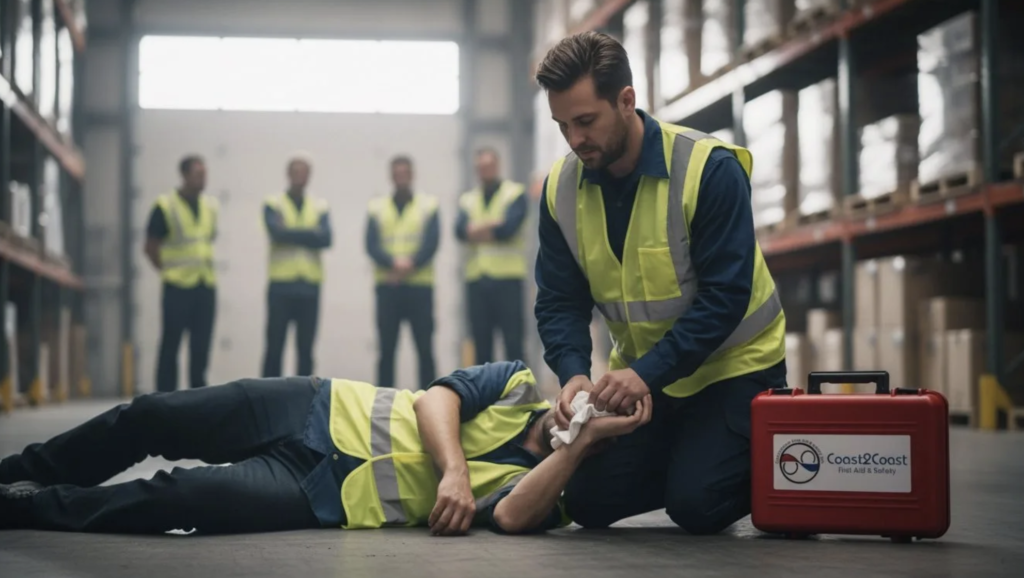
Are slip and fall injuries really that common?
Yes, they happen all the time. Think about how many stray items fall out of the sorting bins and land right in the middle of a walking path.
- A stray pair of shoes becomes a severe tripping hazard.
- Spilled liquids from broken household goods turn concrete floors to ice.
- Loose clothing gets tangled in the wheels of shopping carts.
When an employee or a customer takes a hard fall on solid concrete, the injuries can be severe. Head trauma, sprained wrists, and broken bones are very real threats in these high-volume spaces.
Why do supply chain hubs need better emergency readiness?
Cities with massive logistics footprints—like Brampton, Ontario, for example—handle incredible amounts of inventory every single day.
Managers in these warehouse-heavy regions know that speed is everything. Trucks need to be unloaded. Bins need to be rotated. The faster the pace, the easier it is for safety protocols to slip through the cracks. But ignoring safety on the floor is a massive liability.
When your team is trained in WSIB/OHS approved emergency response, they become your first line of defense. They learn how to secure an accident scene, assess the victim, and apply life-saving techniques before paramedics arrive.
What specific medical emergencies happen on the floor?
While minor cuts and scrapes are daily occurrences, warehouse teams need to be ready for much worse.
- Crush Injuries: Hands and feet regularly get caught under heavy rolling bins or dropped pallets.
- Severe Bleeding: Broken glass, sharp metal edges, or exposed staples in cardboard boxes can easily slice through gloves.
- Cardiac Arrest: The physical strain of unloading trucks, combined with the stress of the retail floor, can trigger heart emergencies in both staff and older shoppers.
- Heat Exhaustion: Many older sorting facilities lack proper air conditioning in the summer. Workers unloading trailers can easily overheat and faint.
How can retail managers build a safer work environment?
You cannot slow down the pace of a busy outlet center, but you can control how your team reacts when things go wrong.
Building a safety-first culture starts at the management level. You need to identify the hidden hazards in your specific building and make sure your staff actually understands the safety protocols. Posting a sign on the breakroom wall is not enough.
Why is Blended Learning a smart choice for retail scheduling?
Taking your floor supervisors away for two days of training is tough when you are short-staffed. This is where Blended Learning completely changes the approach to workplace safety.
Your team completes the theoretical portion of their training online, at their own pace. Then, they only need to attend a shorter, focused in-class session to practice their physical skills like chest compressions and bandaging. This keeps your warehouse fully staffed while ensuring everyone meets local safety regulations.
Your employees work hard to keep the bins stocked and the customers happy. Giving them the tools to protect themselves and others is simply the right thing to do.
If you are looking for first aid training near Kennedy Road South, the Queen Street East corridor, or other areas close to our Peel Region facility, then you may reach out to Coast2Coast First Aid/CPR – Brampton in that area.
Frequently Asked Questions
Why is first aid training important for retail warehouse workers? Warehouse environments involve heavy lifting, moving equipment, and high foot traffic. Training ensures workers can immediately treat common injuries like falls, cuts, and crush incidents while preventing situations from getting worse.
What are the most common injuries at outlet bin stores? The most frequent issues are slips, trips, and falls caused by loose merchandise on the floor. Pinch and crush injuries to fingers and toes from heavy rolling bins are also highly common.
How does blended learning work for employee CPR courses? Blended learning splits the training into two parts. Employees complete the theory modules online at their convenience, followed by a shorter, hands-on, in-person session to practice physical life-saving skills.
Do retail spaces legally require first aid trained staff on-site? Yes. Occupational health and safety regulations generally dictate that workplaces of a certain size must have a minimum number of certified first aid representatives on shift at all times.
How often should warehouse employees renew their training? Standard first aid and CPR certifications typically expire after three years. However, high-risk environments often encourage annual CPR refresher courses to keep emergency skills sharp.