Walk through any Goodwill bins outlet and you’ll see shoppers making a beeline for electronics, clothing, and housewares. The art and craft section sits quieter, often passed over. Most people glance at the framed prints and keep walking. But tucked between dusty paintings and half-finished needlepoint projects, there’s a category worth stopping for: paint-by-numbers kits.
The global paint-by-numbers market was valued at about $1.56 billion in 2024, growing at roughly 7.1% annually and projected to reach $1.79 billion by 2026, according to industry tracking data from gripsintelligence.com. Custom and personalized kits are the fastest-growing segment. But the vintage originals from the 1950s and 60s hold a different kind of value, both sentimental and financial.
This article covers why these kits end up at Goodwill bins, how to spot the ones worth grabbing, what they can resell for, and why painting by numbers might be one of the best things you do for your mental health this year.
Why Paint by Numbers Kits Show Up at Goodwill Bins
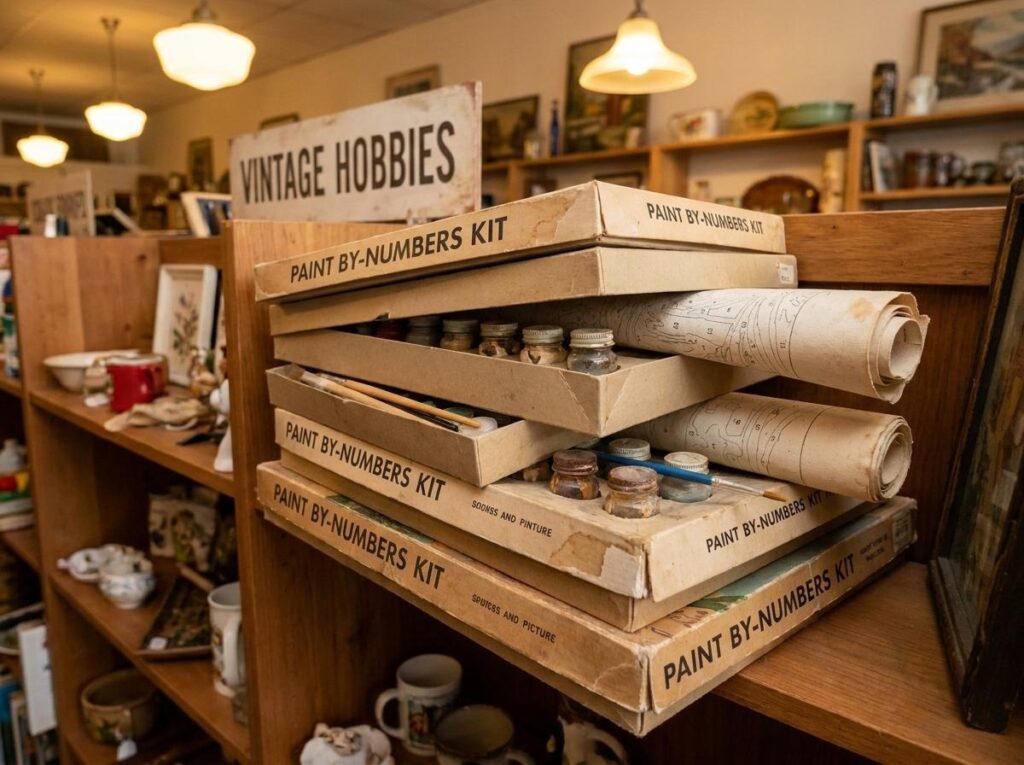
Paint-by-numbers kits find their way to Goodwill bins through a few predictable channels. Estate sales are the biggest source. When families clear out a house, half-finished kits from the 1950s through the 1970s get donated by the boxful. Retail overstock from craft stores also makes its way to Goodwill. And then there are the abandoned projects: someone started a kit, lost interest, and years later it went into a donation bag.
The result is a steady stream of kits priced not by their collectible value but by the pound. At the bins, you’re paying roughly $0.50 to $1.00 per kit. Compare that to a new kit from a craft store that runs $15 to $30, and the opportunity becomes obvious.
Goodwill diverts about 4.6 billion pounds of reusable goods from landfills annually through its donation and retail operations, according to a March 2025 report from GW Today. Paint-by-numbers kits are a small part of that stream. But for shoppers who know what to look for, they punch well above their weight.
Whether you’re after a vintage piece of Americana or a modern paint by number kit that turns your own photo into a canvas, the bins are a surprisingly good place to start your search.
Spotting the Good Stuff: What to Look For
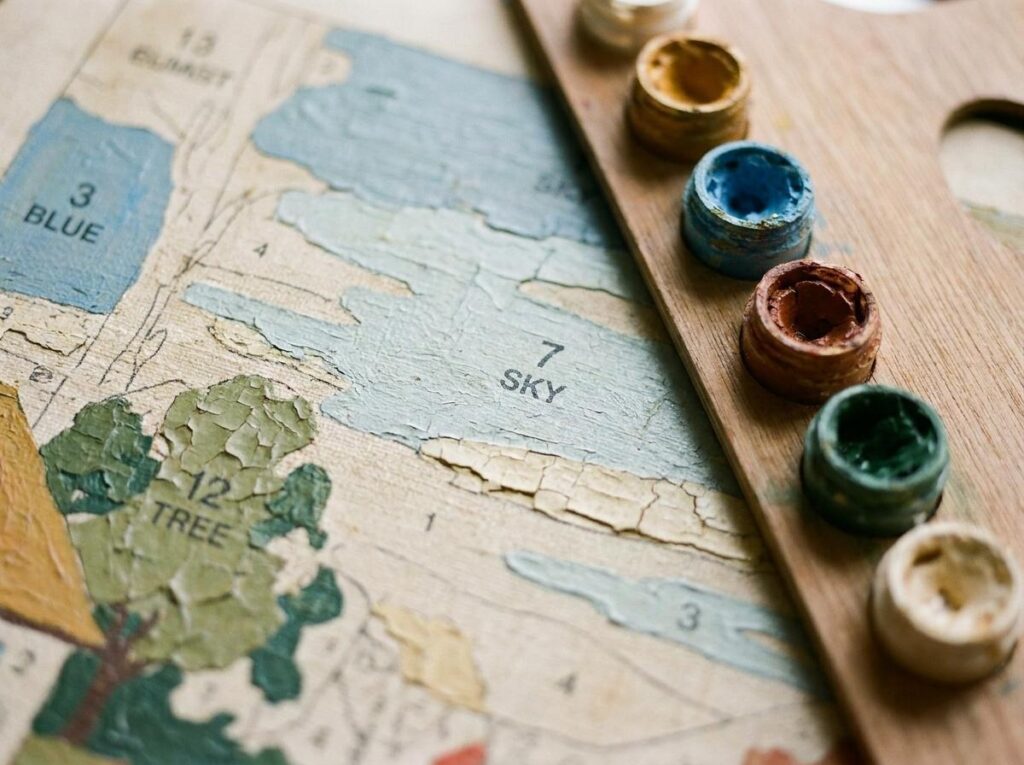
Not every paint-by-numbers kit at the bins is worth grabbing. The ones that hold value come from a specific era and need to be in decent condition.
The golden age of paint-by-numbers was the 1950s, kicked off by Dan Robbins and the Craft Master company. Robbins, an artist and commercial designer, created the first mass-market paint-by-numbers kits in 1951 after pitching the idea to the Palmer Paint Company. The Associated Press reported on his death in April 2019, noting that his invention sold over 12 million kits in the first year alone and sparked a craze that swept the country.
Here’s what to look for when you’re digging through the art bins:
- Craft Master era kits (1951-1959). These are the most collectible. Look for the original Craft Master logo on the box. Subjects such as scenery, animals, and abstract designs command the highest prices. Portraits and religious scenes are less sought after.
- Complete paint pots. A kit with all its original, unopened paint pots is worth significantly more than one with dried-up or missing paints. Check that the pots are still sealed or at least not cracked.
- Original box in good shape. The box adds value. If the cardboard is intact and the artwork on the front is still bright, you’ve found a strong candidate.
What to skip: kits with water-damaged boards, fully dried paint pots, or subjects that were mass-produced well into the 1970s and 80s with no collectible demand. Modern kits with generic licensed characters rarely hold resale value.
How Much Are Vintage Paint by Numbers Kits Worth
The price gap between what you pay at the bins and what you can sell for is where the opportunity lives. A complete Craft Master kit in good condition with its original box sells for $20 to $50 on Etsy and eBay. Rare subjects, such as large natural scenes, abstract geometric designs, or kits with unusual color palettes, can fetch $100 to $200 or more, according to market observations across reseller platforms.
Part of that value comes from the cultural history behind these kits. Dan Robbins created the first paint-by-numbers kit as a way to make art accessible to people who didn’t think they could paint. The Smithsonian Magazine covered his legacy, noting that by the end of the 1950s, 1 in 5 American households owned a paint-by-numbers kit. That combination of accessibility and nostalgia keeps the collector market active today.
For bins shoppers, the math is simple. A $0.50 investment that turns into a $40 sale represents a 7,900% return before fees. Even accounting for eBay and Etsy seller fees, the margins on vintage kits are hard to beat for something you found in a bin.
Upcycling Thrifted Frames With Fresh Paint by Numbers
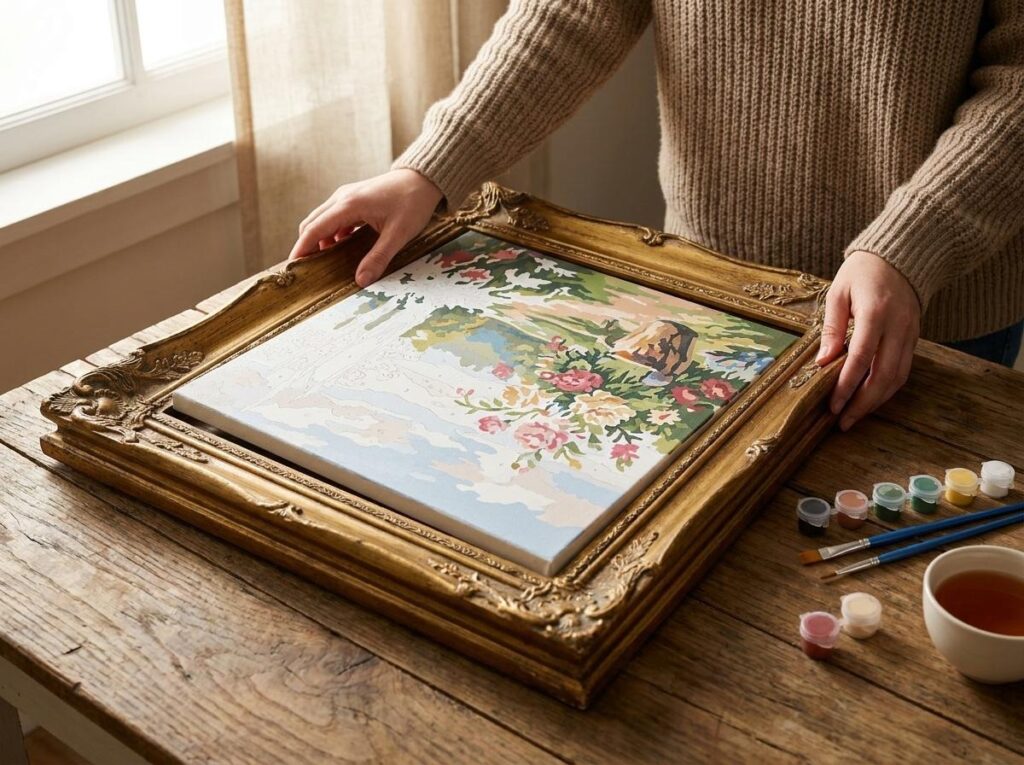
The frames at Goodwill bins are another overlooked category. Gold frames, ornate wood frames, and simple black frames all sell for pennies by the pound. Most need a quick clean or a touch of paint, but they’re structurally sound.
Here’s the trick: pair a thrifted frame with a paint-by-numbers project. You can buy a vintage kit and complete it yourself, or you can go the custom route. A custom kit turns one of your own photos, such as a travel shot, a pet portrait, or a family photo, into a numbered canvas. Once you finish it, drop it into that thrifted frame and you’ve got gallery-quality wall art for under $10 total.
This approach works well if you’re looking to decorate without spending much. The finding art at Goodwill bins guide on this site covers other ways to score affordable wall decor, but custom paint-by-numbers adds a personal touch you can’t get from a framed print.
The Wellness Case for Painting by Numbers

Paint by numbers isn’t just a hobby. There’s growing clinical evidence that it reduces stress. A 2023 peer-reviewed study in the Journal of Art Therapy found a 25% reduction in salivary cortisol after just 45 minutes of paint-by-numbers activity. Cortisol is the body’s primary stress hormone, and a drop of that magnitude is comparable to what researchers see in guided meditation sessions.
A broader meta-analysis published in Nature Mental Health in March 2025 looked at visual arts interventions across multiple studies and found a moderate-to-large effect size for reducing anxiety. The analysis identified the key mechanism as “modest attention focused outside self-awareness.” Essentially, paint by numbers works because it distracts your brain from its own worry loop without requiring the mental discipline of traditional meditation.
The wellness data also lines up with what buyers report. A survey of 2,847 Canadian adults conducted by PaintOnNumbers.ca found that 68% of adult paint-by-numbers buyers cite stress relief and mindfulness as their primary motivation. Another 47% cite creative expression. Those numbers suggest that for most people, the act of filling in the sections matters more than the finished piece.
Your Next Bins Trip
Your next trip to Goodwill bins should include a stop at the art and craft section. Grab any complete Craft Master kit you find with original paints intact. Pick up a few frames while you’re there, regardless of their condition. In many cases, a bit of paint or a new backing board can make them look almost new.
If you find a kit that’s missing paints or has a subject you don’t love, don’t leave empty-handed. The canvas itself can be painted over or used as a base for a custom project. And if vintage collecting isn’t your thing, a custom kit from a service such as NumberArtist lets you skip the hunt and go straight to creating.
Other bins shopping tips for resellers on this site cover how to maximize your time at the bins and which categories offer the best flips. Paint-by-numbers kits might not be the first thing that comes to mind when you think of thrift store gold, but that’s exactly why they’re still sitting there waiting.